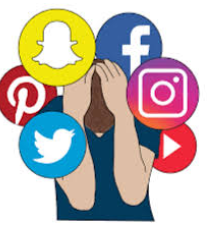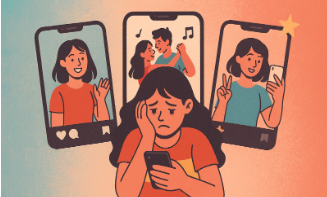
Social media is an interesting concept. Hours can feel like minutes when you’re endlessly scrolling, liking posts that appeal to you or make you feel something. You may laugh a little at a funny pet video, or maybe you just saw a relatable post and you smile because being able to relate makes you feel like you are a part of something. Maybe during your doomscroll you stumble upon a video from your favorite influencer or celebrity— while you are doomscrolling, they are living their glamorous, seemingly stress-free life somewhere you have always wished to go. You become envious. So envious that all you are left to do is like and scroll over and over again, wishing that was you.
This constant cycle of liking and scrolling takes a toll on your mental health in more ways than one.
Watching other people live their glamorous lifestyles online can cause you to subconsciously belittle the experiences and accomplishments you have had in your own life. This is caused by one of the biggest problems to come out of social media: social comparison.
What is social comparison? According to Verywell Mind, “Social comparison theory suggests that people value their personal and social worth by assessing how they compare to others”.
Social comparison causes many mental health issues, especially in teens. According to The Jed Foundation, “Comparing yourself to the unrealistic, filtered, and curated lives of others on social media can increase risk of anxiety, depression, and poor body image”.
When people are busy comparing their lives to others’, they do not take the time to appreciate the life that they have. This can cause that sad feeling or even depression in extreme cases.
When you compare your life to others’, it can cause you to think you are not doing enough or even like you are falling behind in life. From this stems anxiety, which takes a toll on an individual mentally.
Comparison can even cause competitiveness. Comparing yourself to others to an unhealthy extent can cause the want to be better than others. This turns everything into a competition, which is just exhausting.
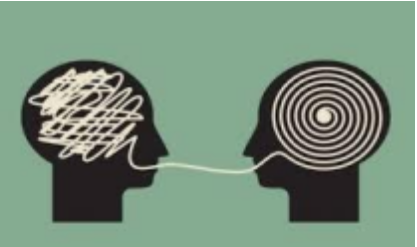
On the contrary, some believe that competitive comparison can be beneficial. The competition gives people motivation to do better. This aspect is constructive, but there is a fine line between constructive comparison and destructive comparison, and it is often hard to differentiate which of the two you fall under.
Social comparison can negatively impact anyone, so it is important to recognize that you are doing it, though that can be easier said than done. According to The Jed Foundation, “The most effective step you can take to minimize negative comparison and protect your well-being is to actively limit your time on social media apps and remember that online posts are not real life”.