The human brain is capable of maintaining the body as well as expressing emotions that affect the daily life of a human being. Developing the brain takes years of learning and growing for it to be at its best. Though it would depend on the person and on how much they actually want to do so. Learning can affect a person if they have issues with mental health.
Mental health has been studied for about 80 some years since the 1940s. While studies on mental health in teens show that the issue didn’t really become popular until the late 90s to early 2000s, it can lead to negative outcomes for education purposes, including focus, academics or even relationships with friends and teachers.
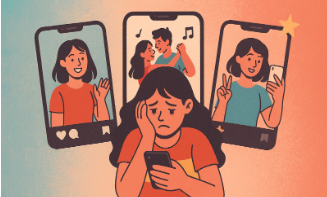
Two of the most common mental health disorders are anxiety and depression. Anxiety can affect learning by being too anxious to speak when need to or called on, too nervous to interact with peers for group projects that are assigned and maybe even having to do outside of school learning because the brain is too focused on being centered or shadowed to attention that it can be difficult for it to register any important information that is needed to get a high percentage in school.
Interview with Andrea Walton Psychology Teacher
Why is mental health such an important issue?
One in four Americans struggle with mental disorders and one in seven worldwide struggle with mental health disorders. So, I think it’s more talked about because of how many people it affects and then also the fact that there is less stigma behind it, and to try to make people feel comfortable and make people feel like they’re not alone when they are struggling with it.
Can mental disorders in teenagers increase the severity of it?
Yes, that can certainly impact anxiety, depression and sometimes people who have been through trauma. Those things can certainly impact or intensify.
How can studies show what we can do to help people with mental health?
The field of psychology in science is really important to be able to look at research and evidence to support different treatments for mental health. And from there it can be utilized to help people in a variety of different ways. It can help colonisations and it can help everybody, really to help somebody else that is struggling with mental health or to help themselves if they are struggling. All of that can help us to get the treatment that’s needed.
Depression can affect school behavior and learning by being too tired or worn out to complete any work, causing the student to not do well on grades. A student can be going through a rough time at home and having only drama at school, along with nobody knowing the student is experiencing anything, so they can’t get help, which would probably bring a student down mentally.
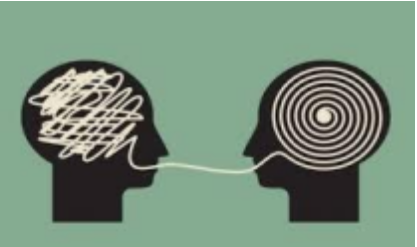
The brain can split into two different personalities for some disorders, for examples like depression and borderline personality disorder. Some categories of personality differences could be not being comfortable around certain people you used to be with, losing interest in activities, and/or having a suddenly different perspective on things. Depression can also make a person seem like they are happy with themselves until the last second.
Leaning towards the scientific part of the brain, mental health is not associated with medical or showing up on image scanning that may include MRI, fMRI and so on.
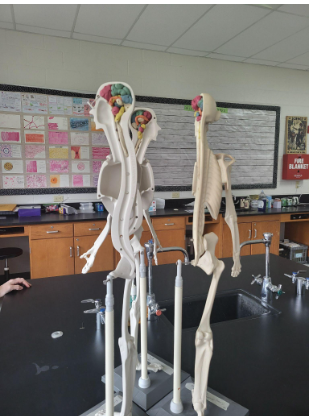
Interview With Michelle Barrie Anatomy and Physiology Teacher
What is the format of the brain?
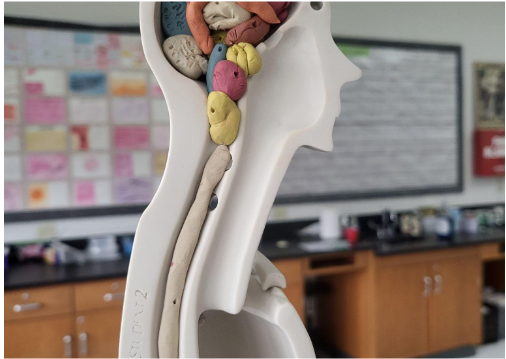
The brain is not formatted, it is all interconnected. There are specific regions that control different jobs. You have your left and right lobe of the brain. All of the neurons of the brain work simultaneously as you go through different things whether it is analytical or more artistic. All of them work together to function.
Does it change into a different format or function as we grow?
The brain doesn’t change format but what actually changes is the neuroplasticity that lets the brain organize itself throughout whether it is experiences, environment, and exposure to things. Your pre-frontal cortex is still gonna be developing and that affects your ability to make decisions and your ability to think long term.
What part of the brain holds the emotion?
Emotions are processed through a network called the limbic system, not a single spot. Amygdala, hippocampus, and hypothalamus are the key structures of the system. The amygdala plays a major role in fear and emotional reactions. The hippocampus connects emotions to the memory of the brain. The prefrontal cortex, also the hypothalamus, helps regulate and interpret those emotions.
Is the part that controls emotions only in one certain spot?
No, emotional control is distributed across multiple brain regions. The amygdala generates emotional responses, especially quick, reactive ones. The prefrontal cortex helps regulate and manage those responses being controlled. Healthy emotional regulation depends on communication between these areas. When that communication is disrupted, it can impact mental health and behavior.
Statistically, would scientists know if the brain hasn’t grown if multiple tests were run? If not, how else would they know someone hasn’t improved mentally?
Scientists do not typically measure “brain growth” in terms of size to determine mental improvement. Instead, they look at function, behavior, and patterns over time. Tools may include brain imaging (like MRI or fMRI) to observe activity and connectivity. Cognitive and psychological assessments help track changes in thinking, memory, and emotional regulation. Improvement in mental health is often measured through behavior, coping skills, emotional regulation, and daily functioning. Progress is not always linear, and lack of visible improvement does not mean the brain is not changing.